

The short answer
Ash Wednesday is the first day of Lent, the forty days before Easter. In 2027 it falls on Wednesday, February 10. At church, a minister marks a cross of ashes on each person’s forehead, a sign of sorrow for sin and a reminder that life is short. The day isn’t named in the Bible, but ashes are: all through Scripture, they go with grief and with turning back to God.
When is Ash Wednesday?
Ash Wednesday falls 46 days before Easter: the forty days of Lent, plus the six Sundays, which aren’t counted as fast days. Because the date of Easter moves, so does Ash Wednesday. It can fall anywhere from February 4 to March 10.
| Year | Ash Wednesday | Easter |
|---|---|---|
| 2027 | February 10 | March 28 |
| 2028 | March 1 | April 16 |
| 2029 | February 14 | April 1 |
| 2030 | March 6 | April 21 |
| 2031 | February 26 | April 13 |
In 2029, Ash Wednesday falls on Valentine’s Day, as it did in 2018 and 2024. Orthodox churches don’t keep Ash Wednesday. Their Lent begins on a Monday, called Clean Monday, and usually on a different date, because they calculate Easter differently.
What does Ash Wednesday mean?
Ash Wednesday begins Lent with two honest truths. The first is that we have sinned and need to turn back to God. The second is that we are mortal. Both go back to the first chapters of the Bible, and both are meant to lead somewhere hopeful: to Easter.
The traditional first reading for the day calls God’s people home: “Yet even now,” says the LORD, “turn to me with all your heart, and with fasting, and with weeping, and with mourning.” (Joel 2:12). The traditional psalm is Psalm 51, David’s prayer after his sin with Bathsheba: “Create in me a clean heart, O God. Renew a right spirit within me.” (Psalm 51:10).
The ashes say the same thing without words. They are a sign of mortality and repentance, and they are traced in the shape of the cross, the sign of forgiveness.
What happens at an Ash Wednesday service?
Ash Wednesday services are usually short and quiet. There are readings and prayers, and then people come forward one at a time. The minister dips a thumb in the ashes and traces a small cross on each forehead, saying words like these: “Remember that you are dust, and to dust you shall return.”
The words echo what God said to Adam after the first sin (Genesis 3:19). Abraham used the same picture of himself when he pleaded with God for Sodom: “I am dust and ashes.” (Genesis 18:27). Some churches use a different line, a call to repent and believe the good news.
The Gospel reading is usually Jesus’ teaching on giving, praying and fasting in secret (Matthew 6:1–6, 16–21), and many services end with Communion. Anyone can receive ashes, including children and visitors. You don’t have to be Catholic.
Where do the ashes come from?
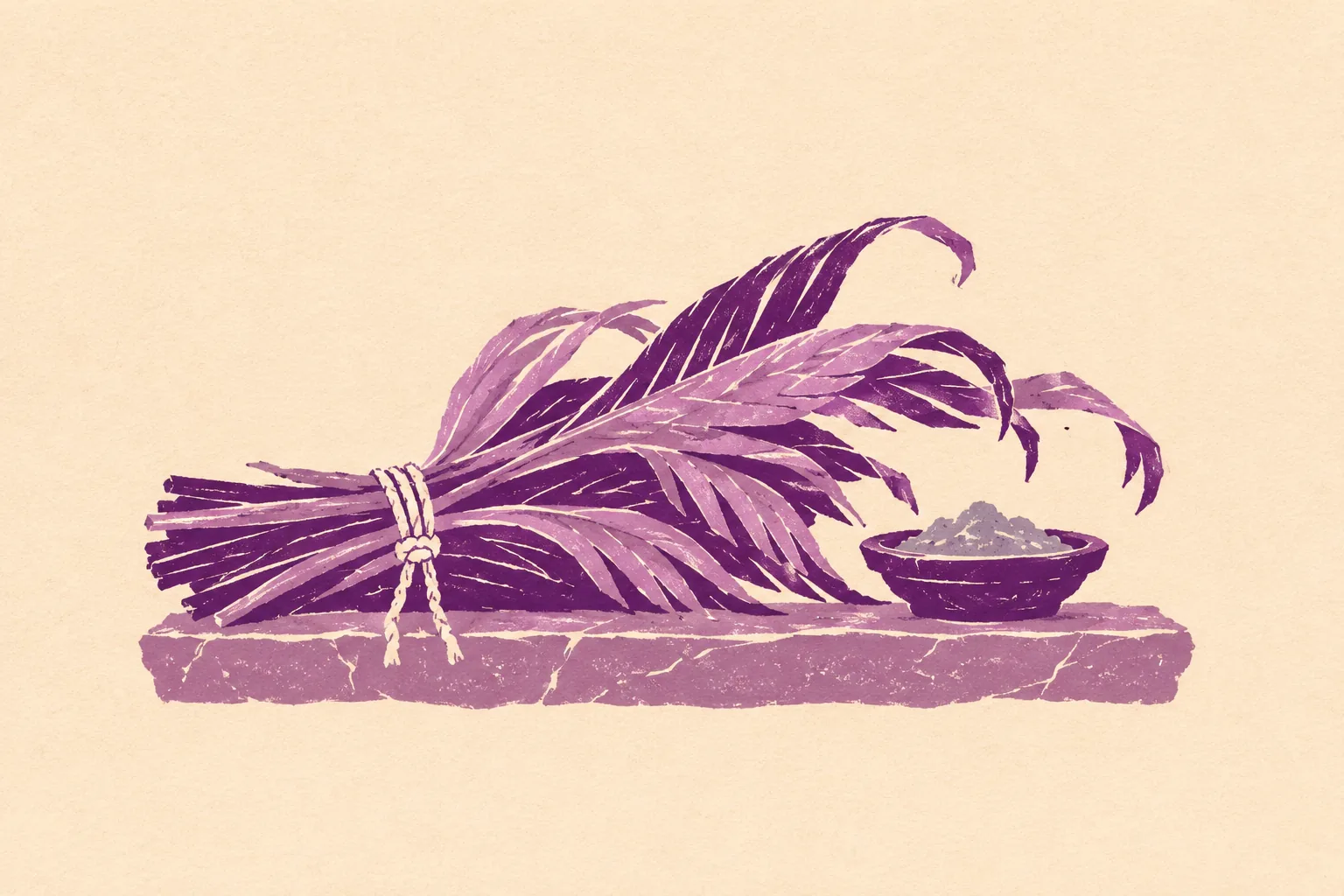
The ashes are usually made by burning the palm branches from the previous year’s Palm Sunday, often mixed with a little oil so they stick. The palms waved to remember Jesus riding into Jerusalem become, a year later, the ashes that start the road back to Easter.
In the Bible, people put on ashes when they grieved or repented. When Mordecai learned of a plan to kill his people, he “tore his clothes and put on sackcloth with ashes” (Esther 4:1). When Jonah preached in Nineveh, even the king “covered himself with sackcloth, and sat in ashes.” (Jonah 3:6).
The prophets warned that ashes alone mean nothing: “Is it to bow down his head like a reed, and to spread sackcloth and ashes under himself? Will you call this a fast, and an acceptable day to the LORD?” (Isaiah 58:5). God wants hearts that change, and hands that help the hungry and the poor.
A short history of Ash Wednesday
In the early church, people who had committed serious sins did public penance through Lent. On its first day they put on sackcloth and were sprinkled with ashes, and at Easter they were welcomed back. Over time, other Christians asked for ashes too, as a sign that everyone needs mercy.
By around the year 1000, whole congregations in parts of Europe received ashes. In 1091, the Synod of Benevento, under Pope Urban II, called for everyone, clergy and laypeople alike, to receive them on the day.
Many Protestant churches stopped using ashes at the Reformation. Over the last century, many have taken them up again, and today Anglicans, Lutherans, Methodists, Presbyterians and others hold Ash Wednesday services.
Do you fast on Ash Wednesday?
Catholics aged 18 to 59 fast on Ash Wednesday and Good Friday, eating one full meal and two smaller ones that together don’t make a second full meal. Everyone 14 and over goes without meat on those days and on every Friday in Lent. Many Protestants fast too, as a personal choice rather than a church rule.
In the Bible, fasting goes with repentance, and the reading from Joel calls the whole community to it: “Blow the trumpet in Zion! Sanctify a fast. Call a solemn assembly.” (Joel 2:15). For more on fasting and what to give up, see our guide to Lent.
How long do you keep the ashes on?
There’s no rule. Many people leave the cross on for the rest of the day and wash it off at bedtime. Others wipe it off after the service. Either is fine. The ashes don’t say I’m holy. They say I’m a sinner who needs God.
What matters is the change the ashes stand for. Isaiah promised that God would give his people “a garland for ashes, the oil of joy for mourning” (Isaiah 61:3). Ash Wednesday starts in the dust, and Lent ends at an empty tomb.
How to keep Ash Wednesday
Even if you can’t get to a service, you can mark the day.
- Find an Ash Wednesday service near you. Many churches hold one early in the morning, at lunchtime and in the evening.
- Read Psalm 51 slowly, and pray it as your own.
- Choose what you’ll give up for Lent, and what you’ll take up in its place, such as reading the Bible every day.
- Fast from a meal, or from something you lean on, like your phone, and use the time to pray.
- Give something to someone in need, as Isaiah 58 asks.
Common questions
Is Ash Wednesday a holy day of obligation?
No. Catholics aren’t required to go to Mass on Ash Wednesday, though it is one of the busiest church days of the year. They are asked to fast and to go without meat.
Can you eat meat on Ash Wednesday?
Catholics 14 and older don’t eat meat on Ash Wednesday, though fish is allowed. Most Protestant churches have no rule about it.
Do you have to be Catholic to get ashes?
No. Anglican, Lutheran, Methodist, Presbyterian and many other churches give ashes, and anyone who comes forward can receive them, whether they belong to the church or not.
Is Ash Wednesday in the Bible?
No. The day came later, from the early church’s keeping of Lent. But ashes appear all through the Bible as a sign of grief and repentance, and the day’s readings, from Joel 2, Psalm 51 and Matthew 6, all come from Scripture.