

The short answer
Psalm 121 is a short song for people on the road. It asks where help comes from and answers, “My help comes from the LORD, who made heaven and earth.” Then it uses the word keep six times: God doesn’t sleep, he shades you, and he watches over your going out and your coming in.
Psalm 121 in full
Here is the whole psalm in the World English Bible, numbered by verse. Its heading, “A Song of Ascents”, is part of verse 1.
- “I will lift up my eyes to the hills. Where does my help come from?”
- “My help comes from the LORD, who made heaven and earth.”
- “He will not allow your foot to be moved. He who keeps you will not slumber.”
- “Behold, he who keeps Israel will neither slumber nor sleep.”
- “The LORD is your keeper. The LORD is your shade on your right hand.”
- “The sun will not harm you by day, nor the moon by night.”
- “The LORD will keep you from all evil. He will keep your soul.”
- “The LORD will keep your going out and your coming in, from this time forward, and forever more.”
Who wrote Psalm 121?
The heading doesn’t name a writer. It calls the psalm a Song of Ascents, one of fifteen songs in a row, Psalms 120 to 134, that share that title. Most readers take them as songs for pilgrims. Three times a year, Israelites traveled to Jerusalem for the great feasts, and Jerusalem sits high in the hills of Judea, so every road there went up.
Read the songs in order and you can hear the journey. Psalm 120 starts far from home: “In my distress, I cried to the LORD. He answered me.” Psalm 121 is on the road. Psalm 122 arrives: “I was glad when they said to me, ‘Let’s go to the LORD’s house!’”
Psalm 121 also changes voice. In verses 1 and 2, someone speaks for themselves. From verse 3 on, a second voice answers them, a friend, a priest or a parent, and the answer is all about you.
Where does my help come from? (verses 1–2)
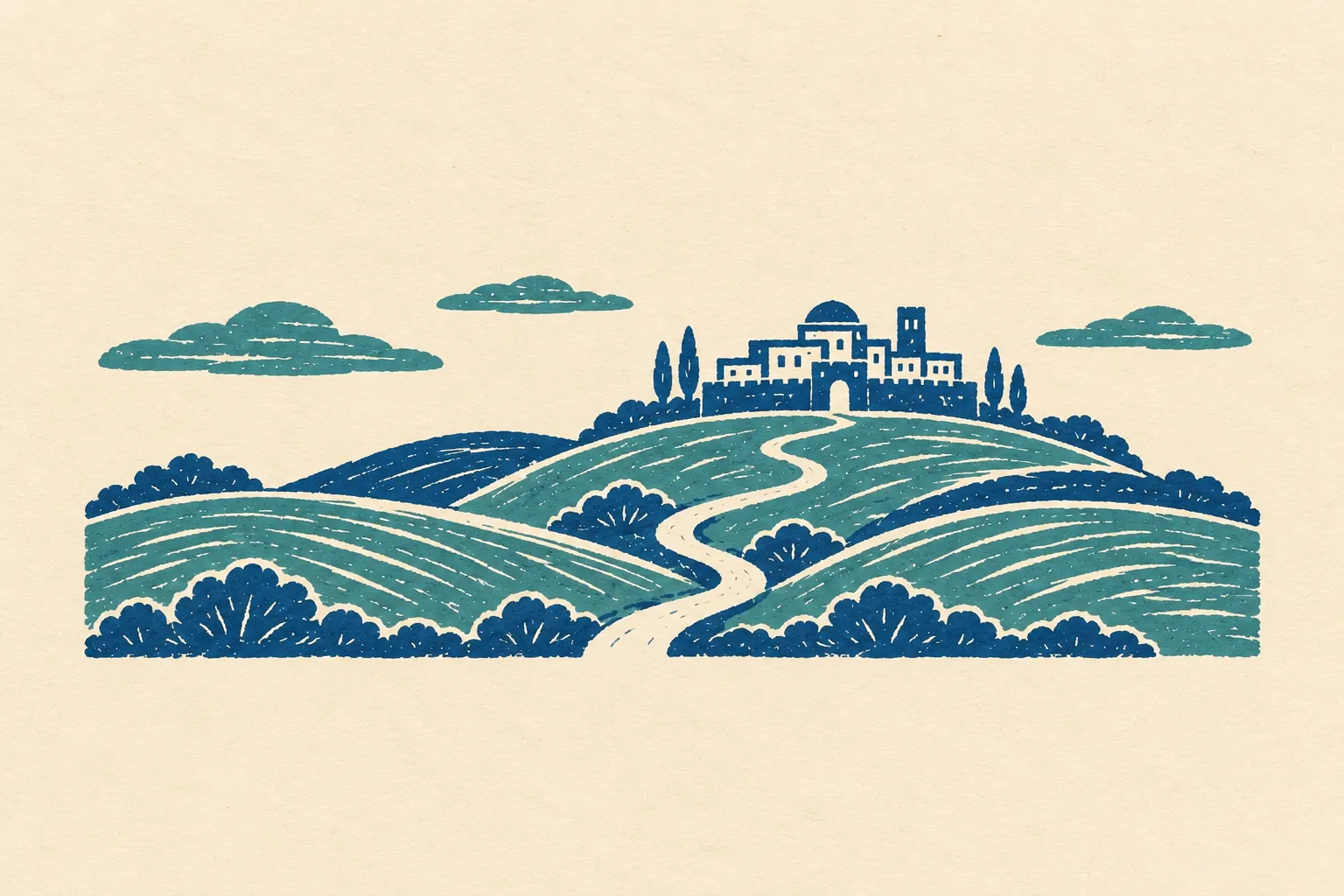
“I will lift up my eyes to the hills.” People read this line two ways. The hills could be the danger ahead: steep paths, robbers, and the hilltop shrines where people prayed to other gods. Or they could be the hills of Jerusalem, where the temple stood. Either way, the psalm doesn’t stop at the hills.
The question is the turning point: “Where does my help come from?” The answer looks past the hills to the one who made them. Your help comes from the LORD, “who made heaven and earth”. He is bigger than the road and bigger than whatever waits at the end of it.
The keeper who never sleeps (verses 3–4)
On a rocky mountain path, one slip could break a leg or worse. “He will not allow your foot to be moved” is a promise for exactly that kind of road.
Then the psalm says it twice: God doesn’t slumber, and he doesn’t sleep. Israel’s neighbors believed their gods could sleep. When the prophets of Baal got no answer, Elijah mocked them that “perhaps he sleeps and must be awakened” (1 Kings 18:27). The God of Israel never has to be woken up.
That’s why so many people read this psalm at night. You can close your eyes because God doesn’t close his.
Shade by day and by night (verses 5–6)
“The LORD is your keeper. The LORD is your shade on your right hand.” In a hot country, shade isn’t a luxury. A traveler without it could collapse from the heat. The right hand was also where a bodyguard or a defender stood, so God is pictured right beside you.
“The sun will not harm you by day, nor the moon by night.” Sunstroke was a real danger. Many ancient people also feared the moon could make you ill, and the English word lunatic comes from that old belief. Day and night together mean every hour.
Your going out and your coming in (verses 7–8)
“The LORD will keep you from all evil. He will keep your soul.” In the Psalms, the soul usually means your whole life, you as a living person, not only the part that lives on after death.
The last verse widens the promise to all of life. Going out and coming in is how the Bible talks about the everyday: leaving home in the morning and coming back at night, setting off on a trip and returning. And it doesn’t end when the trip does: “from this time forward, and forever more.”
That’s why families read Psalm 121 before a journey, a move, a new job or the first day at a new school, and why it’s often read when someone is sent off to start something new.
What Psalm 121 does and doesn’t promise
“The LORD will keep you from all evil” can sound like a guarantee that nothing bad will ever happen. Yet faithful people do have accidents, get sick and suffer on the road. The pilgrims who sang this psalm knew that too: the song before it begins in distress.
The psalm is a poem of trust. Its promise is that God is awake, near and watching over you, and that your life is in his keeping wherever you go. It doesn’t say you will never face trouble. It says you won’t face it alone, and that trouble doesn’t get the last word. For Christians, being kept “forever more” reaches past this life too.
If you’re reading this psalm because you’re afraid, that’s a good reason to read it. It was written for people walking into the unknown.
How to pray Psalm 121
- Read it before you leave home, or before something new begins.
- Ask the question of verse 1 out loud, and name what you’ve been looking to for help.
- Answer with verse 2, as your own words.
- If you’re praying for someone who is traveling, put their name where the psalm says you.
- Pray verse 8 over the whole day, from going out to coming in.
For more prayers like this one, see our prayers for protection, or read Psalm 91, the other great psalm of shelter. If you read Psalm 121 at bedtime, our night prayer pairs well with it.
Common questions
Why is Psalm 121 called the traveler’s psalm?
Because it was sung by pilgrims climbing to Jerusalem, and it talks about feet on the path, the heat of the day and your going out and coming in. People still read it before journeys, moves and new beginnings.
What does “I will lift up my eyes to the hills” mean?
The traveler looks at the hills ahead, which can mean the dangers of the road or the hills of Jerusalem. Then they ask where help really comes from, and the answer is the LORD who made the hills.
Is Psalm 121 a prayer for protection?
Yes. It calls God your keeper and promises his care day and night. It is a prayer of trust, not a charm, and it promises God’s presence with you rather than a life without trouble.
What is a Song of Ascents?
It’s the heading of Psalms 120 to 134. Ascent means going up, and these short songs are usually linked to pilgrims going up to Jerusalem for the feasts.